

Portugal’s relationship with Judaism is long and complicated, with some unexpected twists and turns to it. One of my favorite aspects to the story turns out to not only be interesting, but delicious as well!
How long have there been Jews here? At least since the Romans, who made note of Jewish settlements in their province of Lusitania.
Jews suffered under the Visigothic kingdoms after the Empire fell, and they saw the Moorish invasion of 711 as a liberation. The caliphs welcomed both Christians and Jews, although as non-Muslims they had to pay an extra tax.
As the Reconquista began, the Christian leaders from Austrasia took care not to harm the Jews in the territories they took back. Afonso Enriques, the first king of unified Portugal, actually made a Jew, Yahia Ben Yahi, his first supervisor of tax collectors for the new country. He also made him Chief Rabbi of Portugal; an official post granted by each king thereafter.
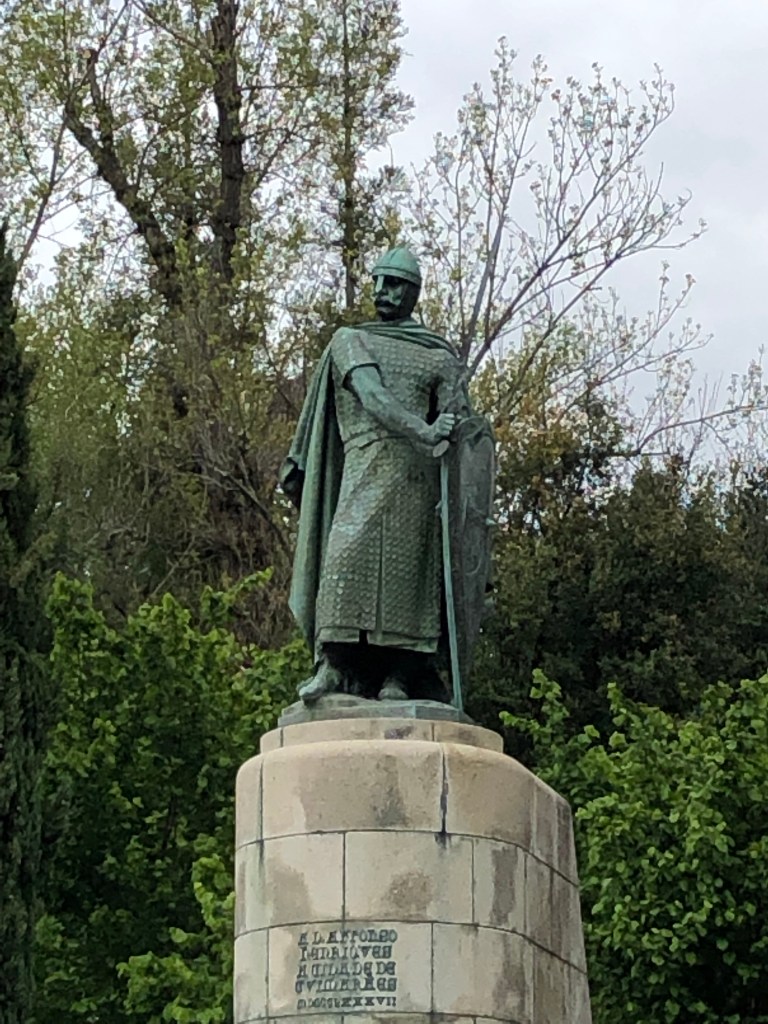
During the next few hundred years, Jews and Judaism flourished in Portugal, especially in the North. Jews served as mayors, treasurers, and even one royal steward.
And then, disaster struck. In 1492, Ferdinand and Isabella of Spain ordered the expulsion or conversion of all the Jews in Spain. Many fled to Portugal, but King João imposed harsh restrictions on these refugees – if they were still in the country after eight months, their possessions were confiscated and they were effectively enslaved, given as property to Portuguese nobles.
Thankfully, when King Manuel ascended to the throne in 1494, he rescinded these harsh laws. But in 1497, he wanted to marry the daughter of Isabella, and expulsion of the Jews was part of the bride price.
Now, the reality was that Manuel had no problem with Jews – in fact, he realized how central they were to the overall Portuguese economy, and the role they played in the great discoveries of the 15th century. So, although Jews were forced to publicly convert or leave, a fair amount of “New Christians” stayed in Portugal, attending church on Sundays like good Catholics, but quietly practicing their old religion and keeping their traditions on the side.
This state of affairs lasted about 40 years, especially in northern towns like Porto, Braga, and Barcelos. Unfortunately, the Inquisition was growing in power, and in 1540 the first Auto de Fe took place in Lisboa. Eventually, almost 1200 Jews were burned at the stake in Portugal, and the majority of Portugal’s Jewish population fled to Ottoman territories, The Netherlands, or the New World.
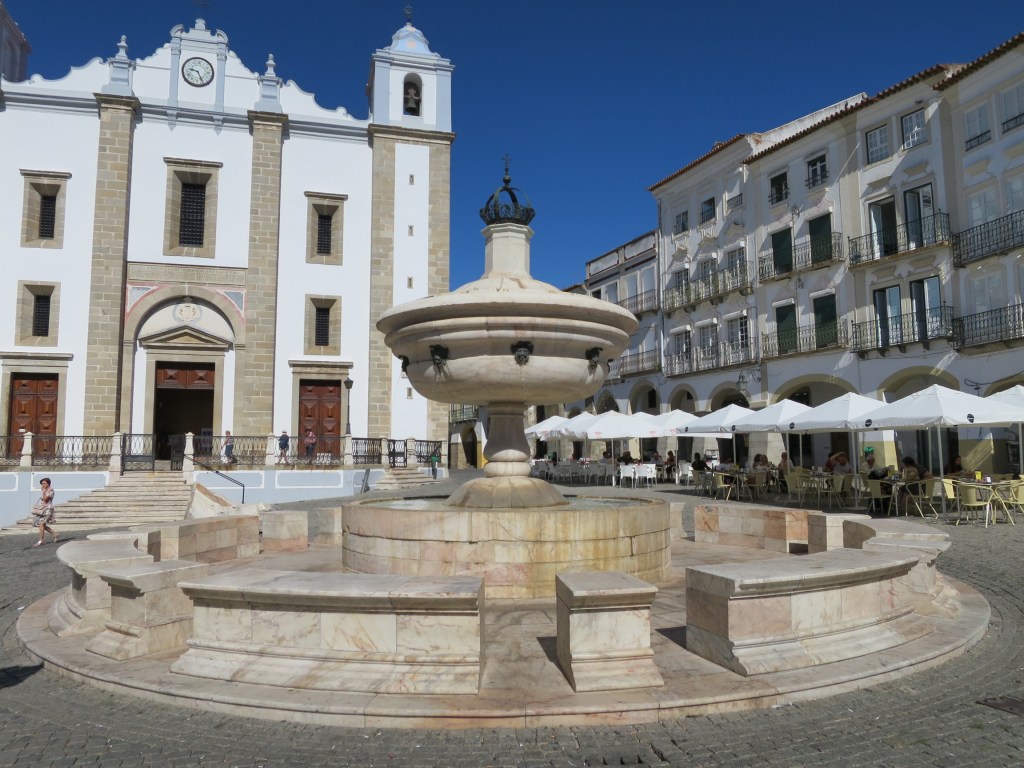
Portugal today is proud of its Jewish history. They’re deeply ashamed of the way they treated Jews in the past, which is why they passed the Sephardic repatriation laws. It’s why I have Portuguese citizenship – my ancestors were among those who left for Turkish lands and wound up in Romania.
They will also vehemently assert that Portugal is not now and has never been anti-Semitic. As far as they’re concerned, the problem with the Inquisition was cause by politics between Spain and the Pope, not any deep-seated antipathy on the part of the Portuguese people. They’ll point to the survival of the Belmonte Jews of Tras-os-Montes as proof that they were willing to turn a blind eye when possible. I think the fact that recent studies have shown that the average Portuguese DNA is about 28% Jewish heritage shows exactly how much sympathy existed historically!
They are even more proud of their record during WWII – Portuguese diplomats in Europe saved many thousands from the Nazis by providing visas and letters of passage. Even the dictator Salazar spoke out against Nazi racial mania and made it clear that Portuguese Jews could not be discriminated against for religious reasons.
So, what does this all have to do with food?
During the time when Jews were trying to maintain a low profile in the 15th and 16th centuries, they realized there was one serious problem they’d need to overcome if they wanted to have any hope of successfully passing as Christian. You see, Portugal is a very pork-centric country … and sausage is an absolutely essential part of the national diet. Not eating sausage was kind of a give-away.
And thus, was born the Alheira! Ground chicken and breadcrumbs with garlic (alho) and a savory blend of spices, stuffed into a casing (NOT pig intestines), smoked, and cured. Grill it, slice it, mash it – serve it hot or cold, eat it with fried potatoes or rice or scrambled eggs or in a sandwich – delicious!
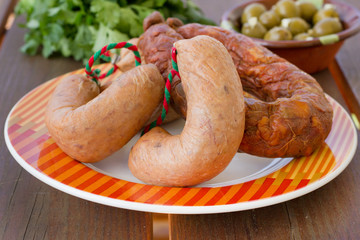
And actually, it was a little too successful … it rapidly caught on with the non-Jewish crowd, and it wasn’t too long before someone figured out the secret. Most alheira today actually does have some pork in it (which of course improves the flavor, but hey!).
Our friend Carol has four different types of alheira on her menu – one poultry, two pork, and one vegetarian. You can find it made with wild game meats, too.
Alheira meat is more finely ground than most Portuguese sausage, so it’s softer and easier to work with. You can get them just plain grilled, but the other night I had alheira sliders at another place, and it often shows up in croquettes, too.
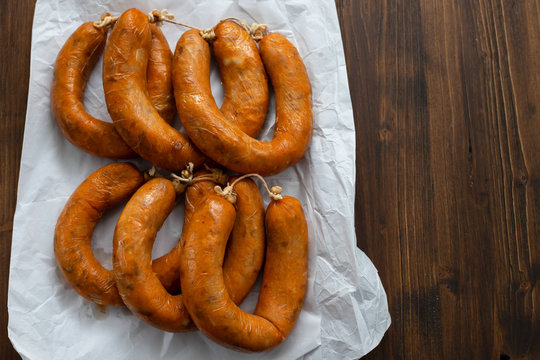
Once again, I think this is mostly a northern thing – I don’t remember ever seeing alheira in Lisboa, but I could be wrong. What I do know is that I’ve heard about this from multiple sources here – the Portuguese love telling the story of how the people of Portugal found out how much they really liked Jewish food!
 A Modern Odyssey - Expatriates in Iberia
Very interesting! Thanks Phil! I’m hungry for some of those sausages.
LikeLike