
We suffer from the same problem a lot of people have – too much stuff.
We have furniture, kitchen appliances, books, and electronics.We have an overabundance of musical instruments, paintings, and arts and craft supplies.
We have clothes – and since we live in a four-season climate, plus we like to look nice, plus both Kristie and I are sometimes guilty of recreational shopping, we have a LOT of clothes.

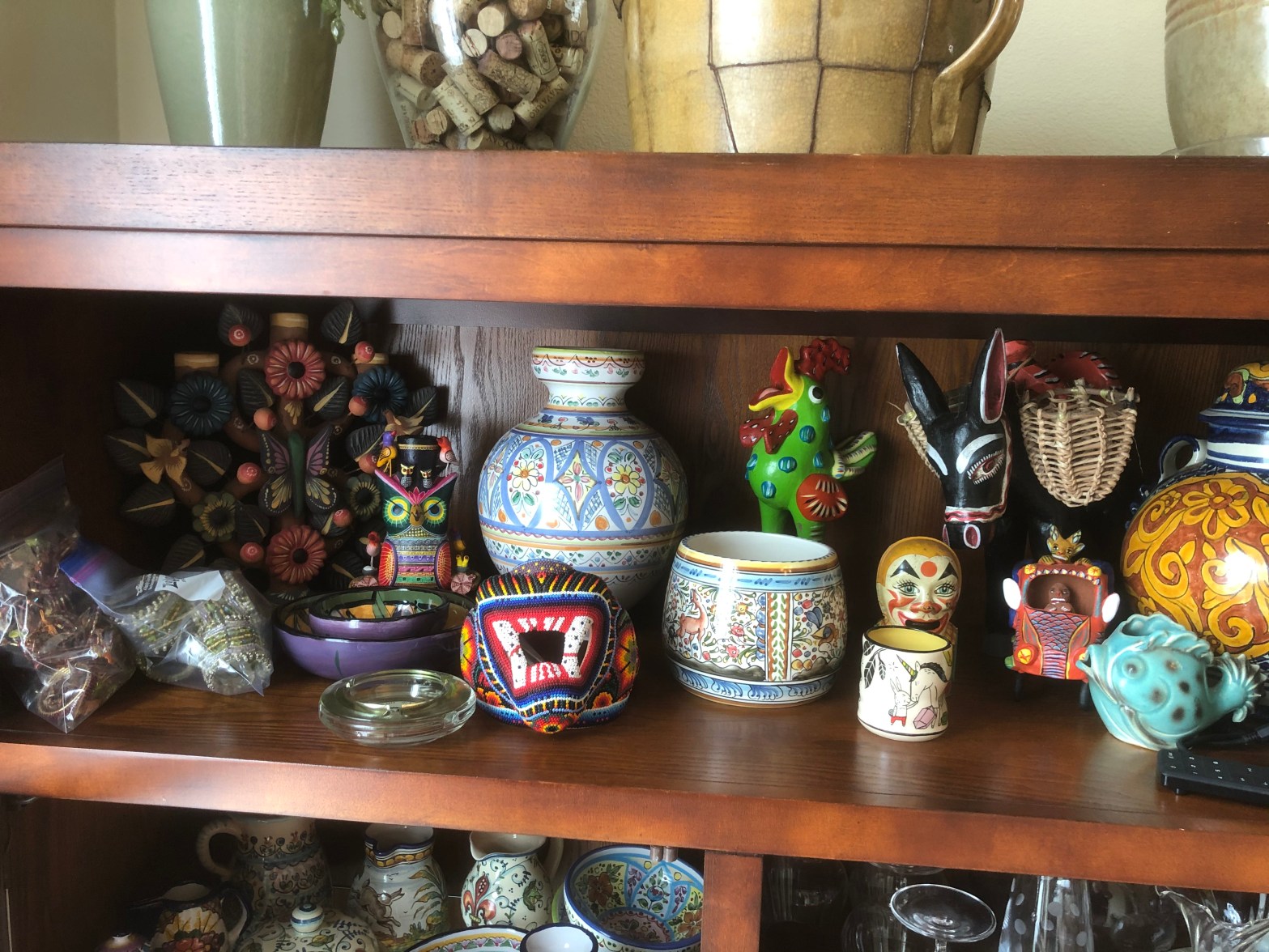
We also have tchotchkes – bric-a-brac, souvenirs, decorator items, memorabilia, and special seasonal décor.
So, how do you get all this stuff moved internationally? Well, the best answer is, you don’t. Moving a household full of stuff to Europe is ruinously expensive, plus living quarters there are a) smaller, and b) have less closet space.
Kristie and I made a decision early on that we were going to use this as an opportunity to unload almost everything that we’ve accumulated in the last 30+ years (and some stuff that we both had before we even got together). I got some preliminary quotes from moving companies, and it looked like our best plan was to try and stick with a 7’ x 7’ x 4’ container, and then whatever luggage we had on the actual day of departure.
I will tell you, in our 32 years together, we had some of our tensest moments and worst disagreements over the whole “What to get rid of?” question. Kristie is much more sentimental than I am, and it was difficult for her to let go of stuff that represented memories of people and places that meant a lot to her. Intellectually, she understood the need, but it was a wrench.
And in all honesty, I was not as sympathetic as I should have been – I just wanted it done, and I didn’t want to be scurrying around trying to clear away years’ worth of accumulation at the last minute. To me, it was mostly just stuff, most of which we didn’t need.

The good news is that at the end of the day we reached an accord, but it was probably the most difficult and stressful part of the whole adventure.
I started with preparation early – almost a year ahead of time. I had actually made a dent in the book collection before we moved to the townhouse in 2007. When we moved into the previous home, I had 47 cartons of FICTION … when we moved to Hillsboro, I had whittled it down to 13 cartons of books overall, but that was still too many.
Since I am fine with e-readers, I made my criteria really simple – if the book was available in electronic format, I didn’t need it in hard copy. My only exceptions were picture books and graphic novels, which I don’t think look good in e-versions – but even with those, I didn’t keep it unless it was stuff I viewed often.
This meant I gave up some “treasures” (my 1908 26-volume edition of the complete works of Mark Twain being an example), but the best stuff went to good homes with people who would appreciate them, and the rest went mostly to the local library. My total for books this time around is four cartons.
Kitchen stuff, linens, and other household items were easy, for the simple fact that we would need them long before the container arrived at the other end. We don’t expect to see that until late September at the soonest, and we’ll need plates, cutlery, and bed sheets long before then. Since none of our stuff was particularly special, we decided that we could just replace what we needed in Portugal.
Christmas decorations and other mementos took a lot of time to go through (for those of you who have been at one of our winter holiday parties, you will understand how much stuff that was to sift!). We also spent many evenings pulling photos from photo albums and arranging for digitization of the ones we only had paper copies of.
Electronics were one of the easiest things, because of the voltage difference between the US and Europe – if it couldn’t do 220v, it couldn’t come. Computers, yes – that brick you complain about? That’s actually a converter, so all you need is an adapter for the plug. All kitchen appliances, TVs, and other household electronics, no. We’ll just have to replace what we need (REALLY need) on the other side.
Kristie was a bit worried about giving up craft supplies and references. Kristie is a very good crafter, but for her this means having lots of potential materials at hand – whenever you see something you like, you get it, even if you don’t quite know how you’re going to use it. So, there was a pile of fabric, papers, inks, paints, tools, and books of techniques and ideas to sort through.

Kristie was stressed that she’d wind up without the ability to create, in a foreign country, while retired with nothing to occupy her time. I was able to show her websites for craft stores in Porto (plus Amazon.es) to reassure her that she’d be able to replenish her supplies as needed.
Another good thing is that we were able to get a lot of the reference books as e-books, so hard-copy versions were available to donate.
She was able to condense one very full room into five or six boxes that included leftover books, her best tools, and supplies for the projects she knew she was going to work on. Art supplies for me were no problem – I couldn’t put paints into the container, so I just kept my best brushes and my collapsible easel. Simple!
Musical instruments were harder for me but slimming down was necessary. I won’t bore you with the details, but the final cut was one acoustic guitar, one electric guitar, one bass, one violin, one ukulele, and one concertina (okay, that may sound like a lot, but it was a drastic improvement!).

We both made multiple passes at our wardrobes, trying things on, evaluating, getting rid of anything that wasn’t comfortable, and so on. We also did pre-packing exercises to get a good idea of what would actually fit into the two suitcases each we were traveling with. Overflow (including winter clothes) went into boxes for transit.
As a visual aid, I laid out a 7’ x 7’ square on the floor of the garage. As we packed things, we carried the boxes down and stacked them up to 4’ high. This way, we were able to make sure that we weren’t overflowing the available space.
This left very little for the moving company to pack at the end. We saved breakable stuff – art, ceramics, musical instruments – for them since that way they’d be responsible for damage. When it came down to it, they were in and out in less than three hours. The container left our home June 18th, with very little room to spare – but we made it!

I sold some things online, but friends and family claimed the majority of the furniture and a lot of other odds and ends. I’m taking almost daily loads to Goodwill, and I expect to be doing that down to the wire. I’ll be running a load of “hazardous” materials (cleaners, paint cans, etc.) to the official recycling center. We’re cleaning out the pantry – if stuff is past the expiration date, we’re disposing of it, otherwise it will go to the food bank.
People will be stopping by over the next few weeks to get the things they’ve opted for, and Wendy and Aleya (and Jordan? We’ll see …) are driving down from the Seattle area to take a final load away on July 17th. On July 18th, a clean-out service will come in and take away anything and everything that’s left. What’s donatable will be donated, and what’s not goes to the landfill.
Next episode: Moving pets and other complications
 A Modern Odyssey - Expatriates in Iberia